
Sustainability at Giyani
Giyani Metals is committed to conducting its business in a manner that is sustainable and beneficial to all stakeholders. The Company defines sustainability as the purposeful delivery of all projects in a manner that is environmentally responsible and in line with good international industry practice (“GIIP”) whilst contributing to the long-term socio-economic development of local communities and host countries. Moreover, Giyani’s strategy is to become a low-carbon footprint producer of high-purity manganese precursor materials used by battery manufacturers for the expanding electric vehicle market; the Company aims to do so in a manner that has minimal impact on climate.
Giyani’s approach to Sustainable Development
Giyani conforms with international standards, specifically the Equator Principles 4 (2020) (“EP”). Recognised the world over, the EP provide a framework to identify, assess and manage environmental and social risks, and is a benchmark adopted by EP financial institutions (“EPFIs”). As of July 2020, 126 EPFIs had officially adopted the EP. In line with the EP, Giyani incorporates human rights, climate change, and biodiversity into the planning and operation of its projects.
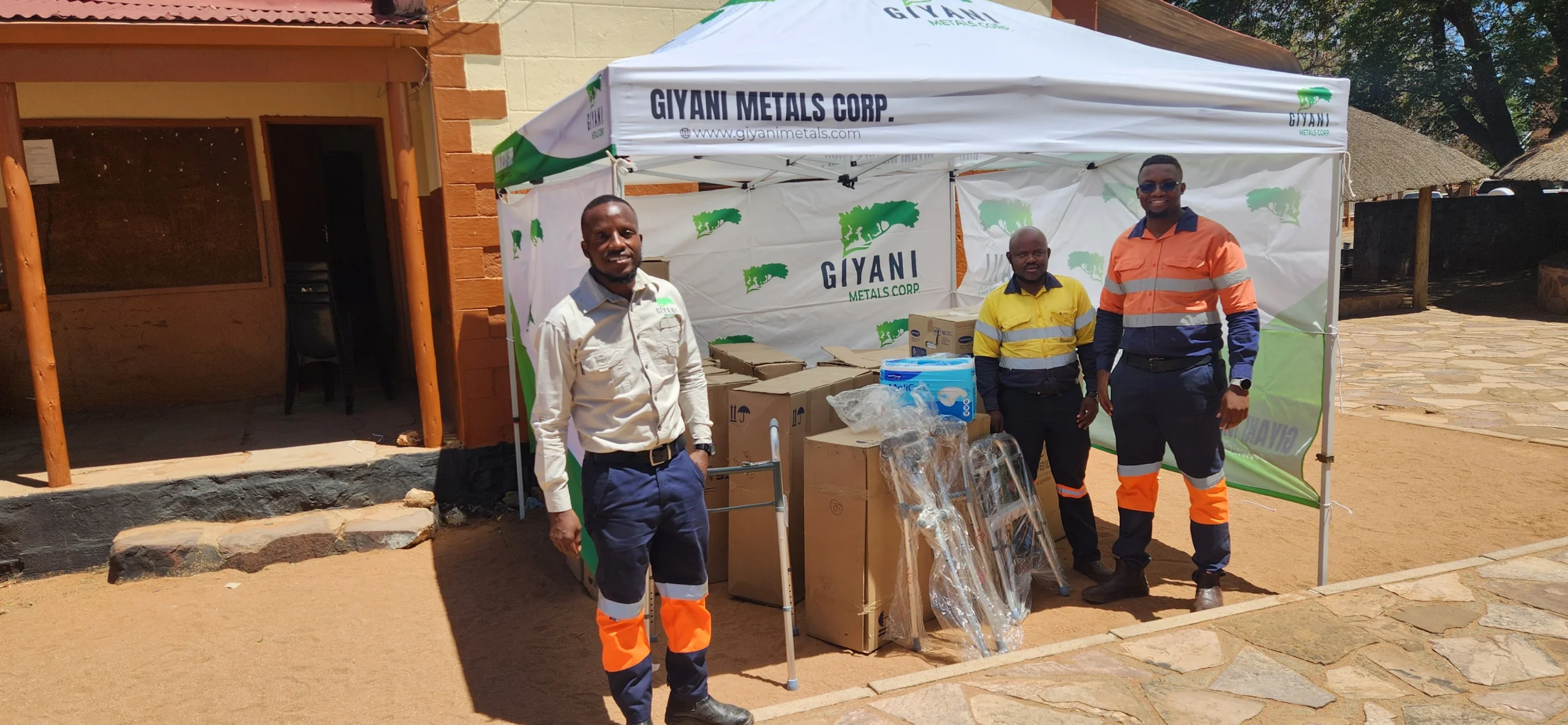
Recent Community initiatives





ESG Responsibilities
- Environmental
Giyani recognises that its exploration and future mining activities will inevitably have impacts on the environment, both positive and negative.
The Company’s approach is to not only minimise negative impacts but to enhance positive impacts and to serve as a responsible steward of the natural resources and the environment in the areas in which it operates.
The K.Hill Project is still in the feasibility phase; its impacts on the environment are managed through an Environmental Management Plan (“EMP”) which was approved by the Department of Environment (“DEA”) in July 2019 and renewed in May 2021 by the DEA for one year; it is subject to further renewal.
The Company has established a number of environmental objectives which it will seek to implement and adhere to in the planning and operation of its projects. These objectives include:
- The completion of any-project specific environmental and social impact assessment (“ESIA”) to meet host-country legislation and GIIP
- Rehabilitation and closure plans to form part of project planning from the outset; this will include addressing legacy issues (e.g., the incorporation of old tailings into closure plans)
- Identifying source-pathway-receptors and potential impacts through specialist studies
- The application of specific-measurable-achievable-realistic-time-bound (SMART) mitigation initiatives to manage negative and positive impacts
- Undertaking thorough trade-off studies to identify the most suitable tailings management options that consider the biophysical and socio-economic environments
- Undertaking trade-off studies to identify preferred options to reduce CO2 emissions and carbon footprint (e.g., solar or wind power compared to diesel generation and grid power)
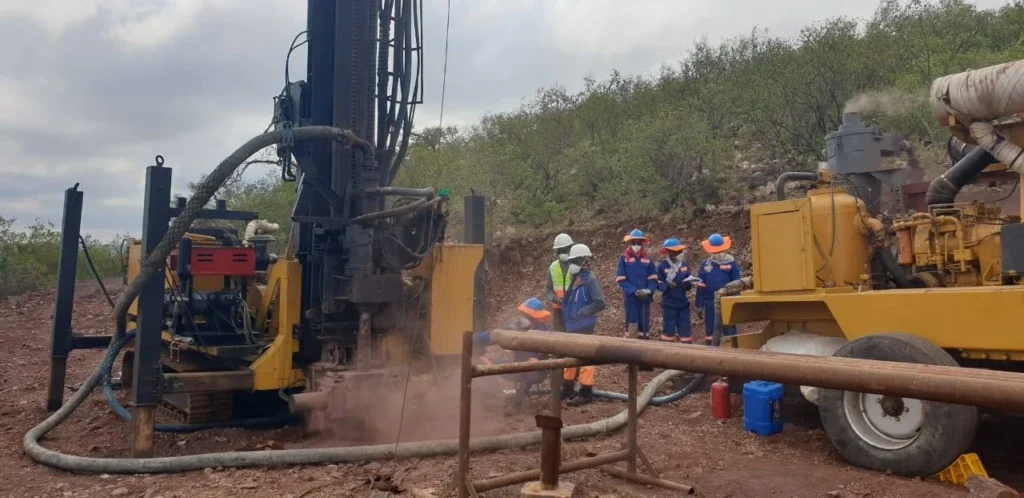
- Using local staff/consultants who are familiar with the biophysical and socio-economic environments in order to bring local knowledge to projects
- Implementing energy efficiency initiatives
- Optimising water usage and managing water quality
- Using natural resources with a focus on the waste hierarchy to avoid-reuse-recycle-recover-landfill
- Identifying sources of air and noise pollution and receptors; modelling data to determine areas of influence and to derive mitigation strategies
- Identifying sources of air and noise pollution and receptors; modelling data to determine areas of influence and to derive mitigation strategies
- Implementing plans to manage and monitor biodiversity in the area of influence of the the Company’s projects
- Identifying and protecting cultural heritage sites

- Social
Giyani recognises it has a fundamental responsibility to protect and improve the lives of employee and community stakeholders. This is core to maintaining its social license to operate.
Employees
To date, local people have been employed on short-term contracts to work on exploration activities. The Company has yet to ramp up to full capacity, but there are a number of principles that have already been adopted in its approach to employment which will be adhered to as the Company grows and develops including:
- Health and safety of workers being a top priority and Giyani will, at all times, strive to achieve zero harm; if it is not safe, work stops until actions have been taken to address problems and working conditions are safe
- In response to the Covid-19 pandemic, Giyani has a Covid policy in place with measures to protect its employees, workforce and third parties such as authorities, contractors and service providers
- An employment policy to give priority to local people once the project is commissioned
- Support the further education and training of employees
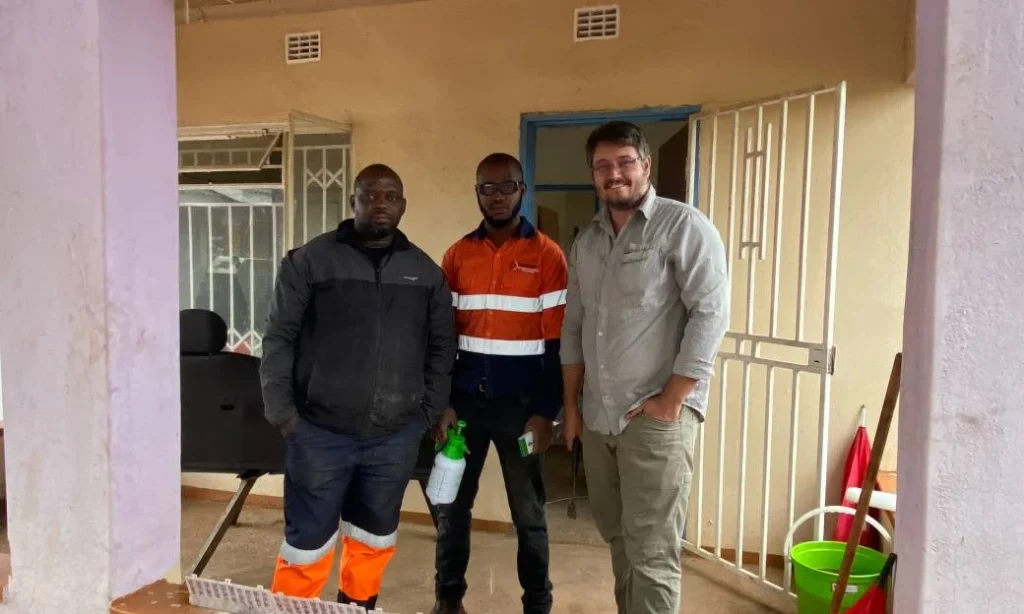
Communities
Giyani recognises it has a fundamental responsibility to protect and improve the lives of employee and community stakeholders. This is core to maintaining its social license to operate.
- Adopting a local procurement policy that prioritises the purchase of goods and services from local suppliers wherever possible
- The respect of cultural norms of the local communities and host countries in which the Company operates
- The implementation of community development plans to facilitate socio-economic development and upliftment
- The development of agreements in cooperation with communities as part of a transparent process for nominating and implementing community projects
- Governance
The Company’s corporate policies and procedures reflect the manner in which the Company conducts its business and is committed to implementing and maintaining the highest standards of governance, ethical conduct, and regulatory compliance both in terms of host-country law and GIIP. The Board has oversight and overall accountability for guiding the strategic direction of the Company, maintaining an ethical culture and effective control of its operations.
The following policies and procedures have been implemented to reflect the Company’s commitment to act honestly, ethically, diligently and in accordance with the law in serving the interests of Giyani’s shareholders, employees, customers, local communities and other stakeholders.
Stakeholder engagement
Stakeholder engagement is the principal mechanism through which relationships with stakeholders are built. A wide range of issues raised by employees, host communities, authorities (local, regional and national) and any other stakeholders are managed by developing and implementing a stakeholder engagement plan. Giyani’s approach to stakeholder engagement focuses on:
- Identifying stakeholders including local communities, residents, authorities, and other interested parties
- Preparing stakeholders to actively engage and contribute to the ESIA and then throughout the life of mine
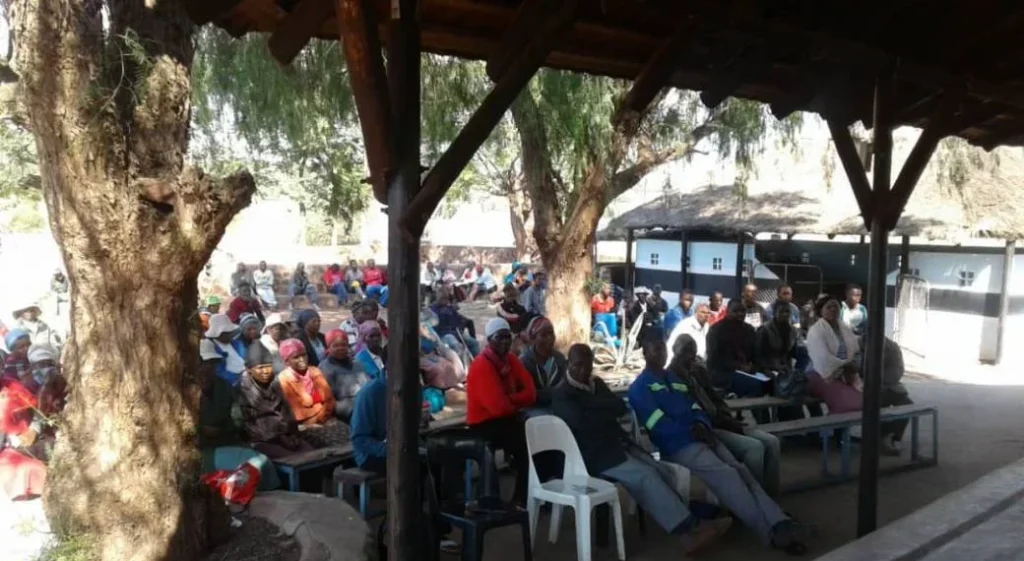
- Participation in consultation meetings to give updates on projects and to listen to questions, concerns, comments
- Offering various ways of engaging with the Company which is geared to cultural norms and literacy levels (e.g., public meetings; open house meetings; one-on-meetings; focus group meetings such as women, youth and specialist interest groups; through written submissions; and/or phone calls). The aim is to encourage people to interact in a setting in which all stakeholders feel free to express themselves
- Establishing grievance procedures to enable stakeholders and workers to register and get responses to grievances in a structured and time-bound manner